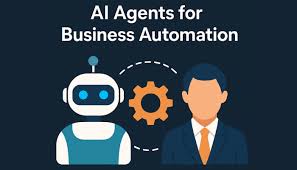
AI tools can automate repetitive tasks in business. They help increase efficiency, reduce errors, and free up staff time for more important work. This leads to better customer service and overall business growth.
What Are AI Tools for Business Automation?
Think of AI tools for business automation as your digital assistants. They use artificial intelligence to perform jobs that people usually do. These tools can learn from data.
They can then make decisions or take actions on their own. This means they can handle tasks like sending emails, scheduling meetings, or even analyzing sales data. They work tirelessly and don’t need breaks.
This makes them great for busy companies.
These tools are designed to handle predictable and recurring tasks. They can process information much faster than humans. They also tend to make fewer mistakes when doing these tasks.
This is because they follow precise rules and algorithms. The goal is to make your business run smoother. It helps you save time and money.
It also lets your team focus on creative work. This kind of work needs a human touch.
My Own Journey with Business Automation
I remember a time when my small online shop was drowning in customer emails. Every day felt like an inbox battle. I’d spend hours answering the same questions: “Where is my order?” “Can I change my address?” “What is your return policy?” It was exhausting and took away from product development.
I felt like I was constantly putting out fires instead of building my dream business. One late evening, after dealing with a particularly complex shipping issue, I just slumped at my desk. I thought, “There has to be a better way.”
That’s when I started researching AI and automation. It felt a bit intimidating at first. I’m not a tech expert.
But I found tools that were surprisingly easy to use. I implemented a simple AI chatbot on my website. It handled about 70% of the common customer inquiries.
Suddenly, my inbox was manageable again! I felt this huge wave of relief. I could finally focus on designing new products and planning marketing campaigns.
It was a game-changer, and it all started with one small step towards automation.
AI Automation: The Core Idea
What it is: Using smart software to do jobs for you.
Why it matters: Saves time and effort.
How it helps: Makes your business more efficient.
The Many Faces of AI Automation in Business
AI tools can automate a wide range of business functions. They don’t just do one or two things. They can touch almost every part of your company.
Let’s break down some common areas where AI shines.
Customer Service
This is a big one. AI-powered chatbots are becoming very common. They can answer questions 24/7.
They can guide customers through simple processes. They can even collect feedback. This means customers get help fast.
Your human support team can then handle more complex issues. They can give more personal attention when needed. This improves customer happiness.
AI can also analyze customer sentiment. It can scan reviews and social media posts. It tells you how people feel about your brand.
This helps you make improvements. It can also help route inquiries to the right person faster. This saves everyone time.
Customer Service AI: Quick Scan
- Chatbots for instant answers
- Sentiment analysis of feedback
- Automated ticket routing
- Personalized support recommendations
Marketing and Sales
AI can help you understand your customers better. It can analyze buying patterns. This helps you create more targeted marketing campaigns.
You can show the right ads to the right people. This leads to more sales. AI can also personalize product recommendations.
For sales teams, AI can help score leads. It tells them which potential customers are most likely to buy. This helps them focus their efforts.
It can also automate follow-up emails. It can even help draft sales proposals. This makes the sales process quicker.
Tools can also automate social media posting. They can analyze what content performs best. They can suggest optimal times to post.
This helps you reach more people. It builds your brand presence online. You spend less time on repetitive tasks.
Human Resources
Hiring can be a long process. AI can help screen resumes. It can identify the best candidates.
This saves HR teams a lot of time. It helps them find good people faster. AI can also automate parts of the onboarding process.
This includes sending welcome emails. It can also provide new employees with training materials.
AI can also help with employee engagement. It can analyze feedback from surveys. It can identify areas where employees might be unhappy.
This helps companies make changes. It can also help with scheduling and payroll tasks. These are often very time-consuming.
Finance and Administration
Many administrative tasks can be automated. This includes data entry. AI can extract information from invoices.
It can then input it into accounting software. This reduces errors. It also frees up your finance team.
They can focus on strategic financial planning.
AI can also help with fraud detection. It can spot unusual transactions. This protects your business.
It can also automate report generation. This provides you with key financial insights quickly. Budgeting and forecasting can also be made more accurate with AI.
AI for Finance: Myth vs. Reality
Myth: AI will replace all financial jobs.
Reality: AI handles repetitive tasks. It frees up finance pros for analysis and strategy. Human oversight is still key.
Myth: AI is too complex for small businesses.
Reality: Many user-friendly AI tools are available. They are designed for businesses of all sizes.
Operations and Logistics
In businesses that deal with physical goods, AI is very useful. It can optimize inventory management. It can predict demand for products.
This helps avoid stockouts or excess inventory. AI can also help with supply chain management. It can find the most efficient shipping routes.
This can lead to cost savings. It also ensures products reach customers faster. AI can also be used in manufacturing.
It can monitor machinery. It can predict when maintenance is needed. This prevents costly breakdowns.
It keeps production running smoothly.
Real-World Scenarios Where AI Automation Shines
Let’s picture a few businesses benefiting from AI.
Scenario 1: A Busy E-commerce Store
Imagine “Gourmet Gadgets,” an online store selling unique kitchen tools. They get hundreds of orders daily. Customer service emails flood their inbox.
Product inquiries, shipping status requests, and return questions are constant. They use an AI chatbot on their website. This bot answers 80% of common questions instantly.
It provides shipping updates by integrating with their order system. It guides customers through the return process with clear steps.
The result? Customers feel heard and helped right away, day or night. The human support team, now smaller, focuses on complex issues.
They handle custom orders and resolve rare problems. Marketing uses AI to analyze past sales. It identifies popular items and suggests personalized offers to past buyers.
This boosts repeat business. Operations use AI to manage inventory. It predicts which gadgets will be popular next season.
This ensures they have enough stock.
Scenario 2: A Growing Consulting Firm
Consider “Strategic Solutions Inc.,” a consulting firm. They manage many client projects. Scheduling meetings with busy clients is a major headache.
Sending out proposals and tracking their status takes time. They implemented an AI scheduling tool. This tool finds meeting times that work for everyone.
It sends out invites and reminders automatically. Proposal tracking software uses AI to alert the sales team. It tells them when a client has viewed a proposal or if it needs a follow-up.
The firm’s HR department uses AI to screen applications. It identifies candidates with the right skills for new roles. This speeds up hiring.
The finance team uses AI to process invoices. It extracts data and matches it to purchase orders. This reduces manual data entry.
Everyone feels more productive. They can spend more time on client work and business strategy.
Automation in Action: A Consulting Firm
Challenge: Meeting scheduling chaos.
AI Solution: Smart scheduling tools.
Benefit: Faster, easier meeting booking.
Challenge: Manual invoice processing.
AI Solution: AI-powered data extraction.
Benefit: Reduced errors, saved time.
How to Get Started with AI Tools for Business Automation
Feeling inspired but unsure where to begin? It’s natural to feel that way. The key is to start small and focus on areas that cause the most pain.
You don’t need to automate everything at once.
1. Identify Your Biggest Time Sinks
Think about the tasks that your team spends a lot of time on. Are they repetitive? Are they prone to human error?
Look at customer service, data entry, scheduling, or basic report generation. These are prime candidates for automation. Talk to your team.
They often know best where the bottlenecks are.
2. Research Available Tools
Once you know what you want to automate, look for tools. Many platforms offer AI-driven solutions. Some tools are very specific.
For example, there are tools just for social media scheduling. Others are more comprehensive, like customer relationship management (CRM) systems with AI features.
Focus on tools that are user-friendly. Read reviews. Many offer free trials.
This is a great way to test them out before committing. Look for tools that integrate well with your existing software. This makes the transition smoother.
3. Start with a Pilot Project
Don’t try to implement a new system across your entire business overnight. Pick one small task or department to pilot. For example, try a chatbot for your FAQ page.
Or use an AI tool to help sort incoming emails for a week. See how it works. Gather feedback from the team involved.
Make adjustments as needed.
4. Train Your Team
Automation is about helping your team, not replacing them. Make sure everyone understands why you are implementing these tools. Provide training on how to use them.
Encourage them to share their experiences. Their input is crucial for success. They might even find new ways to use the tools.
Your Automation Roadmap
Step 1: Find time-consuming tasks.
Step 2: Look for AI tools.
Step 3: Test a small project first.
Step 4: Teach your team how to use it.
What This Means for Your Business Future
Embracing AI tools for business automation is not just about staying modern. It’s about building a more resilient and efficient business. Businesses that automate effectively can adapt faster to market changes.
They can offer better customer experiences. They can also make smarter decisions based on data.
It’s important to remember that AI is a tool. It enhances human capabilities. It doesn’t replace the need for human creativity, critical thinking, and emotional intelligence.
The goal is to free up your team to do more of what they do best. This leads to innovation and growth.
Quick Tips for Smart Automation
Here are a few practical pointers:
- Focus on ROI: Choose automation projects that offer a clear return on investment. This could be saving time, reducing costs, or increasing sales.
- Data Quality is Key: AI tools rely on good data. Ensure your data is clean and accurate for the best results.
- Keep it Simple: Start with the most straightforward automation opportunities. Complexity can come later.
- Measure and Adapt: Track the performance of your automated processes. Be ready to make changes as your business evolves.
Frequently Asked Questions About AI Automation
What kind of businesses benefit most from AI automation?
All kinds! Small businesses can benefit from automating customer service. Larger enterprises can use AI for complex supply chain management.
Any business with repetitive tasks or a need for faster data analysis can see significant gains.
Will AI automation replace my employees?
Generally, no. AI tools are designed to automate tasks, not entire jobs. They free up employees from mundane work so they can focus on more strategic, creative, and human-centric responsibilities.
It’s about augmentation, not just replacement.
Is AI automation expensive to implement?
The cost varies widely. Many user-friendly AI tools are available on a subscription basis, starting at affordable monthly rates for small businesses. The return on investment from time savings and efficiency often outweighs the cost.
How long does it take to see results from AI automation?
For simple automations like chatbots answering FAQs, you might see results within days or weeks. For more complex systems, it could take a few months. It depends on the scope of the project and how well it’s implemented.
What are the biggest risks of AI automation?
Potential risks include data privacy concerns, over-reliance on technology, and the need for upskilling employees. It’s crucial to choose reputable tools, have strong data security measures, and invest in training for your team.
Can AI automate creative tasks like writing or design?
AI can assist with creative tasks. For example, AI can generate marketing copy drafts or suggest design elements. However, human creativity, judgment, and artistic direction are still essential for truly unique and impactful work.
The Future is Now: Embracing Smart Tools
The world of business is changing fast. Embracing AI tools for business automation is key to keeping up. These smart tools can handle a lot of the heavy lifting.
They let you focus on what truly matters. This means better service, smarter decisions, and a happier team. Start exploring today!