It feels like AI tools are popping up everywhere these days. Everywhere you look, there’s a new program promising to make your work easier or your life better. It can be overwhelming trying to figure out which ones are actually good.
You might be wondering which AI tools are worth your time. This guide is here to help sort it all out.
AI tools offer diverse functionalities, from writing assistance and image creation to complex data analysis and coding. Choosing the right tool depends on your specific needs, budget, and desired outcomes, with many platforms providing free trials to explore their capabilities.
Understanding the AI Tool Landscape
The world of artificial intelligence tools is vast and growing fast. Think of it like a huge toolbox. Some tools are great for writing.
Others are made for making pictures. Some help you code faster. And some can even help you plan your day or manage your projects.
Why does this matter so much right now? Because AI isn’t just a trend. It’s changing how we work and create.
Getting the right tool can save you tons of time. It can also help you do better work than you thought possible.
So, what can you expect from this guide? We’ll break down the main types of AI tools. We’ll look at what they do best.
We’ll also talk about things like how much they cost and who should use them. By the end, you’ll feel more confident picking the AI tools that fit your life.
My Own AI Tool Adventure
I remember staring at my screen late one night. I had a huge report due. My brain felt like mush.
I knew I could write well, but the sheer volume of data and the need for creative summaries felt impossible. Panic started to set in. I clicked open a new tab, my fingers flying.
“AI writing assistant” was my search query.
I tried one tool. It spat out bland sentences. Then another.
It sounded robotic. Frustration mounted. I felt a knot in my stomach.
Was this technology really going to help, or just add to my stress? Then I found one that felt different. It asked me questions.
It helped me structure my thoughts. It wasn’t perfect, but it was a partner, not just a tool. That night, I learned that the right AI tool makes all the difference.
It’s not about replacing your brain, but about boosting it.
Types of AI Tools at a Glance
Writing Assistants: Help draft emails, articles, social media posts. They can also summarize text.
Image Generators: Create pictures from text descriptions. Great for unique visuals.
Coding Assistants: Suggest code, find errors, and write code snippets. Speeds up development.
Productivity Tools: Manage tasks, schedule meetings, organize notes. They streamline workflows.
Data Analysis Tools: Find patterns in large datasets. Help make sense of numbers.
AI Writing Assistants: Your Digital Scribe
These tools are probably the most common. They help you with words. Think of them as super-smart helpers for anything written.
They can take a few bullet points and turn them into a full article. They can rewrite a sentence to sound more professional. Or they can summarize a long document into a few key points.
How they work: They use something called Natural Language Processing (NLP). This lets them understand and create human-like text. You give them a prompt, like “Write a blog post about gardening tips.” The AI then uses its training to generate text that fits.
Who uses them: Writers, bloggers, students, marketers, business owners. Anyone who writes a lot!
Popular examples: Jasper, Copy.ai, Writesonic, ChatGPT.
Many of these tools offer different features. Some focus on sales copy. Others are better for long-form content.
Some have grammar checking built-in. It’s good to try a few to see which style you like best. Remember, they are helpers.
You still need to guide them and edit their work.
AI Writing Tool Tips
Be Specific in Prompts: The more detail you give, the better the output.
Fact-Check Everything: AI can sometimes make things up. Always verify information.
Edit and Refine: The AI gives you a draft. You make it sound like you.
Use for Ideas Too: Stuck? Ask the AI for topic ideas or outlines.
AI Image Generators: Art at Your Fingertips
This is where AI gets really visual. AI image generators can create stunning pictures from simple text descriptions. You type “a fluffy cat wearing a tiny hat, in a watercolor style.” The AI then paints that picture for you.
How they work: They are trained on millions of images and their descriptions. When you give them a prompt, they find patterns and create a new image that matches. Different models have different styles.
Some are realistic, others are more abstract or painterly.
Who uses them: Graphic designers, artists, content creators, hobbyists. Anyone who needs unique images without hiring an artist or using stock photos.
Popular examples: Midjourney, DALL-E, Stable Diffusion, Adobe Firefly.
The quality can vary greatly. A simple prompt might give a decent result. A more complex and detailed prompt will yield much better results.
It can take some practice to get exactly what you want. But when you do, it’s amazing.
There are also ethical questions around AI art. Who owns the copyright? Is it fair to artists whose work was used for training?
These are important discussions happening now.
AI Image Generation Styles
Photorealistic: Looks like a real photograph.
Fantasy Art: Dreamlike and imaginative scenes.
Anime/Cartoon: Inspired by Japanese animation or typical cartoons.
Abstract: Non-representational, focuses on shapes and colors.
Watercolor/Oil Painting: Mimics traditional art mediums.
AI Coding Assistants: Your Programming Partner
For anyone who writes code, these tools are a game-changer. They can help you write code faster and with fewer mistakes. They understand programming languages very well.
How they work: They are trained on vast amounts of code from public repositories. They can suggest the next line of code, complete functions, find bugs, and even explain complex code snippets.
Who uses them: Software developers, web developers, data scientists, students learning to code.
Popular examples: GitHub Copilot, Amazon CodeWhisperer, Tabnine.
These tools are like having an experienced pair of eyes looking over your shoulder. They can save developers hours of typing and debugging. This means more time can be spent on designing solutions and building features.
However, it’s crucial to review the code they generate. Sometimes, the suggestions might be inefficient or even contain security flaws. Developers still need strong problem-solving skills and a deep understanding of programming.
| Benefit | Description |
|---|---|
| Faster Coding | Auto-completes lines and suggests blocks of code. |
| Bug Detection | Helps find errors before they become big problems. |
| Learning Aid | Explains code and shows new ways to solve problems. |
| Increased Productivity | Developers can build more in less time. |
AI Productivity and Automation Tools
Beyond writing and coding, AI is making everyday tasks easier. These tools automate repetitive actions and help you manage your time better.
How they work: They can learn your habits, predict your needs, and automate tasks like scheduling meetings, sending follow-up emails, or organizing your files. Some use AI to create summaries of meetings or transcribe audio.
Who uses them: Busy professionals, small business owners, teams, anyone looking to save time on administrative tasks.
Popular examples: Notion AI, Microsoft 365 Copilot, Google Workspace Duet AI, Zapier (for workflow automation).
These tools are excellent for streamlining your workflow. Imagine an AI that knows when you have back-to-back meetings and automatically schedules short breaks. Or an AI that can take meeting notes and turn them into actionable to-do lists.
This is the power of AI productivity.
It’s important to set them up correctly. You need to tell them what you want them to do. But once they are trained, they can free up a significant amount of your time.
This time can be used for more important strategic work.
Productivity Boosters with AI
Smart Scheduling: Finds optimal times for meetings considering everyone’s calendar.
Automated Email Responses: Drafts replies based on the email content.
Task Management: Organizes your to-do list and suggests priorities.
Information Synthesis: Summarizes long documents or meeting transcripts.
Workflow Automation: Connects different apps to perform multi-step tasks.
AI Data Analysis Tools: Making Sense of Numbers
In today’s world, data is everywhere. AI data analysis tools help us understand what that data means. They can spot trends and patterns that humans might miss.
How they work: These tools use algorithms to process large datasets. They can identify correlations, predict future outcomes, and visualize complex information in easy-to-understand charts and graphs.
Who uses them: Business analysts, researchers, marketers, scientists. Anyone who works with data.
Popular examples: Tableau (with AI features), Microsoft Power BI, Google Analytics (with AI insights), IBM Watson.
For businesses, this means better decision-making. Understanding customer behavior from data can lead to more effective marketing campaigns. Predicting sales trends can help with inventory management.
It’s about turning raw numbers into actionable insights.
While powerful, these tools require someone who understands data. You still need a human to ask the right questions and interpret the AI’s findings. The AI is a powerful calculator and pattern finder, but the strategic thinking comes from you.
Data Analysis: AI vs. Human
AI excels at:
- Processing massive datasets quickly.
- Identifying subtle patterns and anomalies.
- Performing repetitive calculations without error.
- Generating predictive models.
Humans excel at:
- Defining the problem and asking the right questions.
- Interpreting the results in a business context.
- Considering ethical implications.
- Making strategic decisions based on insights.
Choosing the Right AI Tool: Key Factors
With so many options, how do you pick the best AI tools for your needs? It’s not a one-size-fits-all answer. You need to think about a few things.
1. What Problem Are You Trying to Solve?
This is the most important question. Are you struggling with writer’s block? Do you need custom graphics?
Are you trying to automate a tedious task? Knowing your main goal will narrow down the options significantly.
For example, if your goal is to write more blog posts, an AI writing assistant is your best bet. If you need unique images for your website, an AI image generator is the way to go.
2. What is Your Budget?
AI tools range from free to quite expensive. Many offer free trials, which is a great way to test them out. Some have tiered pricing based on usage or features.
Free Tools: Often have limited features or usage caps. Good for casual use or testing.
Freemium Models: Offer a basic free version and paid upgrades for more power. Common for writing and productivity tools.
Subscription Services: Monthly or annual fees for full access. These are typically the most powerful and feature-rich.
Pay-as-you-go: You pay based on how much you use. Common for image generation or API access.
Think about the return on investment. If a tool saves you 10 hours a week, and your time is valuable, a monthly fee might be well worth it.
3. Ease of Use and Learning Curve
Some AI tools are very intuitive. You can start using them right away. Others have a steeper learning curve.
They might require you to learn specific commands or settings.
If you’re new to AI, look for user-friendly interfaces. Many offer tutorials or support documentation. If you’re a power user, you might be willing to invest time in learning a more complex tool.
I personally prefer tools that feel like a conversation. I want to tell the AI what I need in plain language. I don’t want to spend hours learning its special syntax.
4. Integrations and Workflow Compatibility
Does the AI tool work with the other software you use? For example, if you use Google Docs, does the AI writer integrate with it? If you use Slack, can the AI chatbot connect to it?
Seamless integration means less copying and pasting. It means your workflow stays smooth. This is a big factor for productivity.
5. Quality of Output and Customization
This is where testing is key. Does the AI’s output meet your standards? For writing, does it sound natural and error-free?
For images, is the style what you envisioned? Can you tweak the results?
Some tools allow for a lot of customization. You can adjust the tone of voice for writing. You can specify artistic styles for images.
This control is often what separates a good tool from a great one.
Real-World Scenarios: When AI Shines
Let’s look at some everyday situations where AI tools can make a big difference.
Scenario 1: The Overwhelmed Small Business Owner
Sarah runs a small bakery. She’s amazing at baking but struggles with marketing. She needs social media posts, website copy, and email newsletters.
She doesn’t have time or budget for a marketing team.
AI Solution: Sarah uses an AI writing assistant like Jasper. She gives it prompts like “Write an Instagram post about our new croissant flavor” or “Create a newsletter subject line for our holiday specials.” The AI drafts content quickly. Sarah then edits it to add her personal touch.
This saves her hours each week. She also uses an AI image generator to create eye-catching graphics for her posts.
Scenario 2: The Student with a Massive Research Paper
Mark is in college. He has a 20-page research paper due. He’s found all his sources but is struggling to organize the information and write coherently.
The sheer volume of text is daunting.
AI Solution: Mark uses an AI tool like ChatGPT to help summarize his research articles. He pastes in sections of text and asks for key takeaways. He also uses it to brainstorm different ways to phrase complex ideas.
The AI helps him structure his paper and overcome writer’s block. He’s careful to check all facts and rewrite in his own voice, but the AI acts as a powerful research assistant.
Scenario 3: The Indie Game Developer
Alex is creating an indie video game. He’s a talented coder and artist, but needs unique assets. Hiring artists for every character and background is too expensive.
AI Solution: Alex uses an AI image generator like Midjourney. He describes the characters and environments he needs, experimenting with different styles. “A gritty, steampunk robot with glowing blue eyes,” or “A lush, bioluminescent alien forest.” He refines the prompts until he gets assets that fit his game’s aesthetic.
This allows him to create a visually rich game on a small budget.
AI Use Cases Quick Scan
Content Creation: Blogs, articles, social media posts, ad copy.
Visual Design: Unique graphics, illustrations, concept art.
Software Development: Code completion, bug fixing, documentation.
Business Operations: Email drafting, scheduling, data summarization.
Learning & Research: Summarizing complex topics, generating study notes.
When is AI Not Enough?
It’s exciting what AI can do, but it’s not a magic wand. There are times when AI falls short.
Lack of True Creativity and Nuance
While AI can generate impressive text and images, it doesn’t truly understand context, emotion, or creativity in the human sense. It’s pattern matching. Deeply personal stories, groundbreaking artistic visions, or highly nuanced arguments often require human input.
Ethical Concerns and Bias
AI tools are trained on data. If that data contains biases, the AI will reflect those biases. This can lead to unfair or discriminatory outputs.
For example, an AI image generator might produce images that reinforce stereotypes.
Inability to Understand Complex Human Needs
AI can’t truly empathize. It can’t understand the subtle social cues or emotional needs that are critical in many human interactions, like therapy, complex negotiations, or deep personal relationships.
Over-Reliance and Deskilling
There’s a risk of becoming too dependent on AI. If we always let AI write for us, our own writing skills might suffer. If AI always solves coding problems, our problem-solving muscles might weaken.
The goal is to use AI as a partner, not a replacement. It should augment your skills, not erode them.
The Future of AI Tools
The field of AI is moving incredibly fast. What seems cutting-edge today will be commonplace tomorrow.
We’ll likely see more powerful AI that can understand and generate content across multiple formats simultaneously. Imagine an AI that can write an article, create a video script, and design graphics for it all at once.
AI will become more personalized, learning your specific style and preferences. Integration into everyday devices and software will become even more seamless. Think AI assistants embedded in your car, your home appliances, and your operating system.
The ethical and societal implications will continue to be a major focus. We’ll need ongoing discussions about AI’s role in jobs, creativity, and society as a whole.
Looking Ahead: AI Trends
Multimodal AI: Understanding and generating text, images, audio, and video.
Hyper-personalization: AI tailored to individual users.
Ubiquitous Integration: AI embedded everywhere.
Advanced Reasoning: AI capable of more complex problem-solving.
AI Ethics & Governance: Increased focus on responsible AI development.
Frequently Asked Questions About AI Tools
Are free AI tools as good as paid ones?
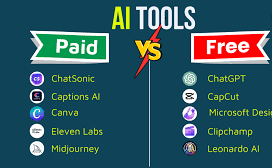
Free AI tools can be very good for basic tasks or getting started. However, paid tools usually offer more advanced features, higher quality output, faster processing, and better customer support. For professional use, paid tools are often a better investment.
Can AI tools write content that passes plagiarism checks?
AI-generated content can sometimes trigger plagiarism detectors, especially if it’s too generic. However, AI tools aim to create original text. It’s always best to edit and rephrase AI output to ensure it’s unique and sounds like your own voice.
Always use plagiarism checkers on any content, AI-assisted or not.
How do I choose between different AI writing assistants?
Consider what type of writing you do most. Some excel at marketing copy, others at long-form articles, and some at creative writing. Try free trials of a few popular ones, test them with your typical prompts, and see which interface and output style you prefer.
Is it ethical to use AI for schoolwork?
Using AI to generate entire assignments is generally considered academic dishonesty. However, using AI tools to brainstorm ideas, summarize research, or improve grammar and phrasing can be acceptable if disclosed and used ethically. Always check your school’s policy on AI use.
Will AI tools take over creative jobs?
AI tools are more likely to change creative jobs rather than eliminate them. They can handle repetitive tasks and assist with idea generation. Human creativity, critical thinking, emotional intelligence, and artistic vision will remain highly valued.
The role of creatives may shift towards guiding AI and adding a unique human touch.
How can I keep my data safe when using AI tools?
Always review the privacy policy of any AI tool you use. Avoid inputting highly sensitive personal or company confidential information unless you are certain about the tool’s security measures. Reputable AI providers will have clear data protection policies.
Final Thoughts on Your AI Tool Journey
Navigating the world of AI tools can feel complex. But by understanding what’s available and what you need, you can find the right helpers. Remember, these tools are here to boost your abilities.
They let you do more, faster, and sometimes in entirely new ways. Start small, experiment, and find what works best for you.